http://employees.oneonta.edu/farberas/arth/Images/ARTH200/politics/Rodin_Burghers_of_Calais_Hirshhornm.jpg
Shared by Mariví de la Rocha:
Aims:
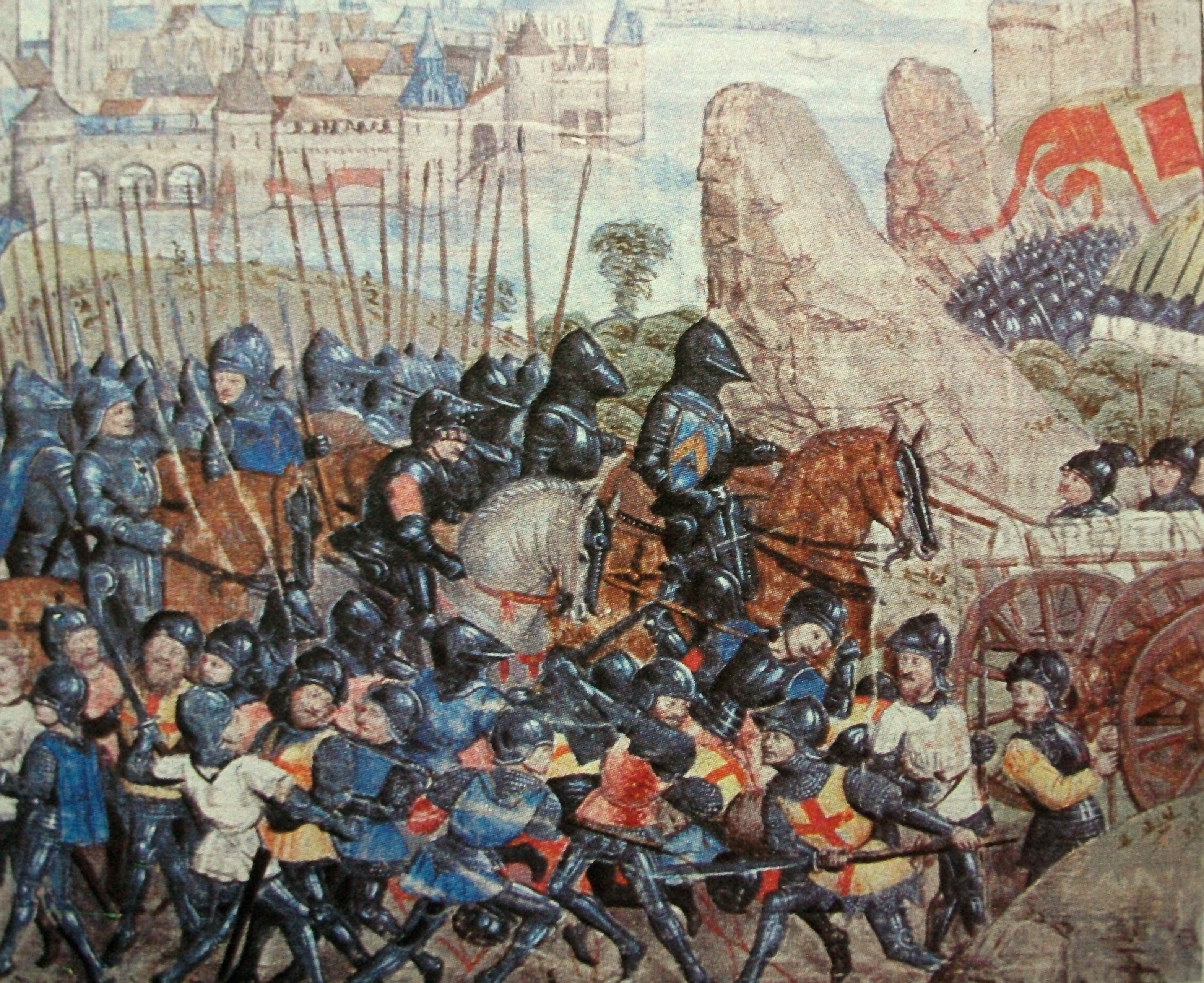
The LS travels to the heart of the Hundred’s Years War, the siege of Calais in 1346. They will learn about a shocking episode involving
war and its consequences, the concepts of citizenship and personal and social responsibility, and finally,
humiliation and mercy.
The
city, after being sieged for eleven months, surrendered to Edward III of
England. This journey will take place after being presented and inquired after
Rodin’s sculpture: The Burghers of Calais.
Learners will trace the sculpture:
its historical origins, and significance for XXI citizens. This activity is designed for students aged 12-18 years old for
Citizenship, English, History and Art classes in Spanish Secondary Bilingual
Education Schools but it can be easily adapted for any other language.
Subjects:
This unit could be used as a cross curricular topic lead by English
as a Second Language and History: The Middle Ages in Europe. It can be easily
linked within the bilingual curriculum in the Spanish Secondary Education with History of
Art, Visual Arts, Citizenship and French.
Age of students:
This
activity can be easily adapted for students from 13 to 18 year old Secondary
students.
Offline teaching materials:
- Paper, pens
- Poster of Rodin’s sculpture: The Burghers
of Calais provided by the Tourist Office, Calais Town Council
- Costumes and Props such as: sheets, chain, rope,
big key, crown, journalist microphone for extension activities
ACTIVITIES
1. Before presenting the activity. 30'
The English and Frechn teachers will take advantage of any activity from the ESL curriculum dealing
with cities/travelling, the very usual activity of asking to write a formal
letter and even a visit to country.
In order to focus on one of the most outstanding icons of the city we
will ask students to write to The Town Council of Calais asking for a poster of
Rodin’s sculpture: The Burghers of Calais.
In
groups, students will make a draft, agree on the final email and send it to the Calais Tourist Office:
https://www.calais-cotedopale.co.uk/practical/calais-tourist-office/contact-us
If
the French teacher takes part in this activity, they can be in charge of this
one as well, so some students can write the email in English and others in
French:
https://www.calais-cotedopale.com/pratique/loffice-de-tourisme
These
email addresses can be provided by the teachers but students can also look for
them on their own as part of the activity. Teacher/s will supervise the whole
process of the agreement of the selection emails and see that they is correctly
sent.
2. How do you feel? 50’
*In this module, the students’
activity will be focused to the use and manipulation of the images, we won’t go
into the sculpture’s topic or historical background yet.
1.
After being grouped in teams of 6 students, they will look at the will look at the sculpture and
guess, as a group what the sculpture is about:
What do you think is being
depicted by Rodin in The Burghers of Calais?
Students will use these links to look a it thoroughly and from different perspectives:
https://www.metmuseum.org/art/collection/search/207812
https://artsandculture.google.com/asset/burghers-of-calais/BQE-GJkcSQUwjQ
1.
Looking
at Dr Ken McGill’s Emotions and Feelings Chart (https://medium.com/@mcgill_dr/emotions-and-feelings-charts-d4ff59ebf86a)
the group chooses which ones of the 6 primal emotions the sculpture reflect:
peaceful, sad, mad powerful, scared and powerful. I recommend to provide
the students with a copy of the chart, very useful as a vocabulary source and
because it will be used again in this lesson plan.https://medium.com/@mcgill_dr/emotions-and-feelings-charts-d4ff59ebf86a
2.
Afterwards,
each student will choose one of the characters in the sculpture and carefully
look at their body and especially at their facial expressions they reveal according
to the second and third sections of Dr. Ken’s
Wheel.
Learners will be asked to look carefully at their facial expressions and body language using these sites:
https://artsandculture.google.com/asset/burghers-of-calais/BQE-GJkcSQUwjQ
3.
The
teacher will open up a Padlet
with the six close-ups of the faces of The Burghers of Calais. In plenary, each
student will share the emotions were depicted by Rodin according to their
perception by using specific features in the sculpture to support their
impressions, which will be saved in the Padlet.
3. Back to Calais, 1347
Activity
1: 20’Video Flipped classroom activity: Al home, students
will watch this video as many times as they want to get familiar with the sculpture
with the help of an expert and answer some comprehension questions:
https://edpuzzle.com/media/5ff4a81f234cd6422f9307af
Other possibilities:
-you can create your own from the original video.
-ask each groups of students to create their own Edpuzzle comprehension. and then you can play the Edpuzzple above for assessment.
Activity 2 : 50’
The
class will begin with the teachers eliciting from the students the main
features of the sculpture enhanced in the video as an introduction to the next
activity. To do so, instead of playing the video again, I would use the poster
or pictures in the whiteboard.
Students
will reteam again in groups of 4, if possible, ask them to group with different
partners.
Students
will look for information about The Burghers of Calais by Rodin regarding to
the historical background and the identity of the six burghers taking brief
notes regarding to these items:
-The
siege of the city of Calais in 1346 during the Hundred
Year’s War
-The
attempt to liberate children, women and old people from the siege
-The
surrender of the city and the offer of King Edward to spare the lives of the
citizens if six of its most prominent cities took the blame for all of them and
presumably be executed.
-The
intervention of Queen Philippa of Hainault persuading the king to spare their
lives to avoid a bad omen for her
unborn child.
-The
burghers of Calais: Who is who in the sculpture?
Sites
that can be used:
-Wikipedia: I would recommend to use versions in
different languages; they will find complementary information, for instance in
Spanish, French and English versions:
https://en.wikipedia.org/wiki/The_Burghers_of_Calais
https://fr.wikipedia.org/wiki/Les_Bourgeois_de_Calais
https://es.wikipedia.org/wiki/Los_burgueses_de_Calais
https://www.metmuseum.org/art/collection/search/207812
https://www.meisterdrucke.com/kunstdrucke/English-School/61928/Belagerung-von-Calais:-Abfahrt-der-B%C3%BCrger.html
The
teacher will help the groups and monitor the gathering of information.
This
Quizlet can be made at the end of the class as a review or assessment of the
activity. It can also be proposed as a competition among the groups.
https://quizlet.com/113957072/the-burghers-of-calais-flash-cards/
Activity 3: 50’
The
teacher will project the Padlet
made in activity 2.3. and ask the students to bring out the chart of emotions, look
at the six burghers again. In pairs they discuss if they will change the emotions
they wrote in the first place, now that they know their story.
Activity 4: classroom and homework
Once activity 3 is over, they will summarize
the story of The Bughers of Calais in short paragraphs and choosing among the
many pictures that have been created along the centuries, they will design a
chronicle in comic format. They can be displayed on A3 papers or using Canva, Padlet, or
any other tool you are familiar with.
However, some students will skillful
enough to draw their own images. This
rubric will be provided beforehand.
My favourite is Canva because students can
upload their own images and they can create a Middle Age comic:
https://www.canva.com/design/DAEcIAfPJX0/QnM2Y1C-kSYXwsMt0YchEg/edit?layoutQuery=comic
or a storyboard:
https://www.canva.com/templates/search/storyboards/
https://www.canva.com/design/DAEcINpMfVs/z80ck1aXlA7ZesFYtrTDTA/edit?utm_source=onboarding
There are many free templates for free, so
every group will have their own design.
Other free and interesting alternatives to
design the comic are:
https://www.fotojet.com/features/misc/photo-comic.html
https://www.adobe.com/express/create/comic-strip
Besides the pages above students can find
more pictures for their comic or storyboard here:
http://www.luminarium.org/encyclopedia/siegeofcalais.htm
https://www.google.com/search?q=Edward+III+of+England+The+burghers+of+calais&rlz=1C1GCEA_enES927ES927&source=lnms&tbm=isch&sa=X&ved=2ahUKEwiM0-Oeq4jwAhXHzIUKHX67C08Q_AUoAXoECAEQAw&biw=1280&bih=625#imgrc=dX_ji775UYx4gM
http://www.luminarium.org/encyclopedia/edward3burghers.jpg
http://www.luminarium.org/encyclopedia/siegeofcalais.htm
https://www.gettyimages.es/fotos/siege-of-calais?phrase=siege%20of%20calais&sort=mostpopular
EXTENSION or ALTERNATIVE ACTIVITIES
These are other activities
which can be proposed to the learners as extension activities alternatives of
the ones given.
1. Enacting and reporting The Burghers of Calais
Once all the groups have
the information the students will choose among the following possibilities in
order participate in the enacting and reporting of the The Burghers of Calais.
It can be recorded and edited for further use.
There will be 2
journalists who will make a tv report of the end of the siege of Calais,
broadcasting each of the following sketches:
a.
Town
Council meeting:
After nearly one year of siege there is a Town Council meeting in which the
Mayor asks the people of Calais how to negotiate the surrender of the city. In
this meeting, six of the most prominent citizens offer themselves to be taken
to Edward III of England as hostages in exchange of the lives of the citizens
of Calais.
b.
In
King Edward’s camp:
After being informed by the Mayor of the burghers’ proposal. The King agrees on
the condition that these six citizens have to walk to his camp dressed in rags,
wearing nooses around their necks and bearing the keys of the city.
c.
Arrival
of the six Burghers of Calais to the King of England’s camp: The Burghers introduce
themselves and surrender the city to Edward III. They offer their lives to the
king in exchange of mercy for Calais and its citizens.
d.
The
king agrees to the terms
of the surrender and then Queen Philippa of Hainault asks his husband the king
to spare their lives in order to avoid a bad omen for their unborn child. The
king agrees and the city and the burghers’ lives are spared.
Students
needed to play these roles:
2 journalists, at least one Mayor, the 6 burghers and other 3 citizens at the
Town council meeting, and in King Edward’s camp: 1 king, 1 Queen, soldiers, 6
burghers, 1 priest
2. Read, reflect and
choose: 40’
The
teacher introduces Rodin’s thought and then launches the question for debate in
plenary.
Rodin did not
want the sculpture placed on a pedestal. He wanted the figures to be on the
same level as those who viewed the sculpture: “In this way they would have
been, as it were, mixed with the daily life of the town: passersby would have
elbowed them, and they would have felt through this contact the emotion of the
living past in their midst; they would have said to themselves: “Our ancestors
are our neighbors and our models, and the day when it will be granted to us to
imitate their example, we would show that we have not degenerated from it.”
The French law
states that no more than 12 original casts of work of a sculpture may be made.
There are sculptures of The Burghers of Calais all over the world, the 1895
cast of the group and as copies of individual statues.
In your
opinion, Which disposition of the statue (as a group or as individuals) best
reflects Rodin’s view?
Get into this
page, reflect and choose your option explaining why:
https://en.wikipedia.org/wiki/The_Burghers_of_Calais
1. Debate (older students): In the light of The Burghers of Calais
students could reflect and debate about these questions: 30’
-Would you give up your
life for strangers? Give examples.
-As a society, who is or
would be willing to take the blame/to sacrifice for the rest?
-Are certain groups of people forced
to take the blame/to sacrifice for the rest?